
Interior painting3 min read
Why Are Touch-Ups So Visible, and When Do You Need to Repaint the Whole Wall?
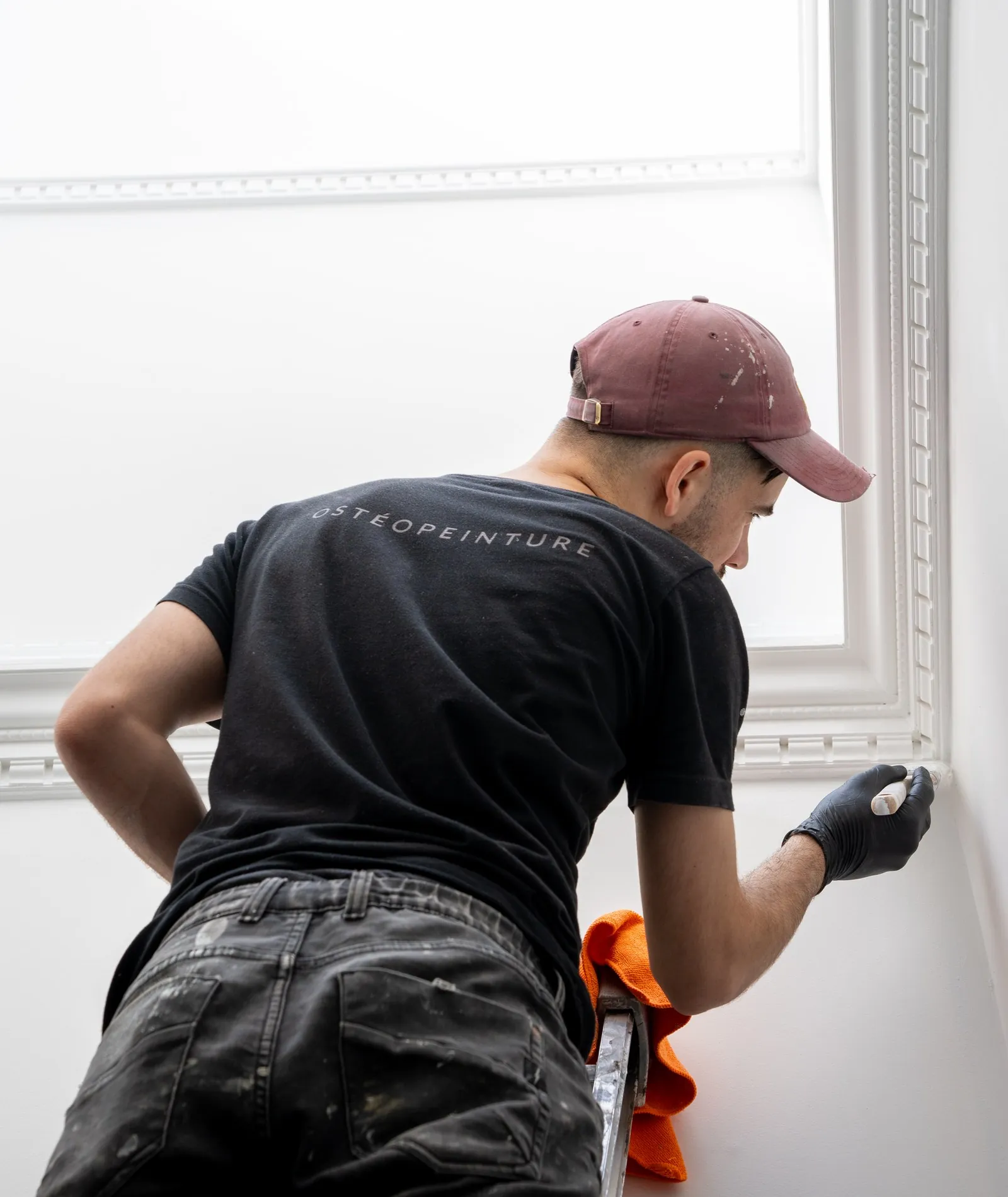
Short answer: a touch-up almost always shows, so it's usually best to repaint the whole wall. Fresh paint rarely matches paint that has been on a wall for years. The colour, the sheen and the texture all end up slightly different, and the eye picks it up right away.
We get touch-up requests all the time: a scuff, a bump, a filled hole, a mark that won't wash off. Here's why a small patch is harder than it looks, and when a touch-up actually works.
Why touch-ups stand out
The old paint has changed. Over the years, paint fades in the sun, yellows, and slowly gets dirty. Because it happens across the whole wall, you don't notice it. Put fresh paint next to it and the difference jumps out. Even the exact same paint, from a gallon left over from the original job, won't match a wall that has aged or been touched by kids for two years.
Colour matching is never exact. When we don't know what paint was used, we can bring a sample to the paint store for a match. It may look close on a small swatch, but it's rarely the same once it's on the wall.
The sheen is different. Every brand's "flat" or "eggshell" is a little different, and so are different product lines from the same brand. If the sheen doesn't match, the patch catches the light differently and shows.
Dark flat colours get darker. On a deep colour in a flat finish, a small touch-up can look more saturated than the rest of the wall, even with the same paint. It can happen on a wall that was painted just days before.
The tool leaves a texture. A rolled wall should be touched up with a roller. A brush leaves a different texture, and it shows.
Finish, colour and light
Flat paint is the least forgiving for touch-ups. Eggshell is easier, and semi-gloss, the kind often used on doors and trim, is the most forgiving.
Dark and deep colours are harder to touch up than light ones.
Light matters too. A window on a wall next to the patched one sends light across the surface, which shows every difference in texture and sheen. But if the colour itself is off, you'll see it in any light.
Why a repaired wall needs a full repaint
A patched area, especially a larger compound patch, soaks up primer and paint much more than the rest of the wall. Paint only the patch and it will look different, no matter how careful you are.
Our approach: prime the patch, often twice, give it a coat or two of paint, then paint the whole wall so everything looks even. Small fills for minor dents don't always need primer, but anything bigger does.
When a touch-up does work
- The wall was just painted. If a freshly painted wall gets scuffed during the job, we can touch it up with the same paint, as long as it isn't a dark flat colour.
- Trim and doors. Touch-ups work well on trim, especially in semi-gloss, when we have the original paint and the surface isn't too dirty. If a section has gotten dirty, we can repaint just that piece. Trim comes in small sections, so redoing a full piece is still a quick job.
For everything else, we repaint the wall, from corner to corner.
Should you keep leftover paint?
Yes. It's useful for small touch-ups on trim and recent paint, as long as you keep the limits above in mind.
- Store it somewhere that never freezes.
- Make sure the lid is sealed tight. Dried paint on the rim can stop it from closing properly.
- It usually keeps for about three years.
- Before using it, shake or stir it well. If there are lumps or it doesn't mix evenly, buy new paint.
Have a wall that needs more than a touch-up? We can take a look and tell you what it really needs. Learn more about our interior painting services in Montreal and Westmount.