
03 / Wood staining · Westmount & Greater Montréal
Deck and fence staining in Montreal and Westmount
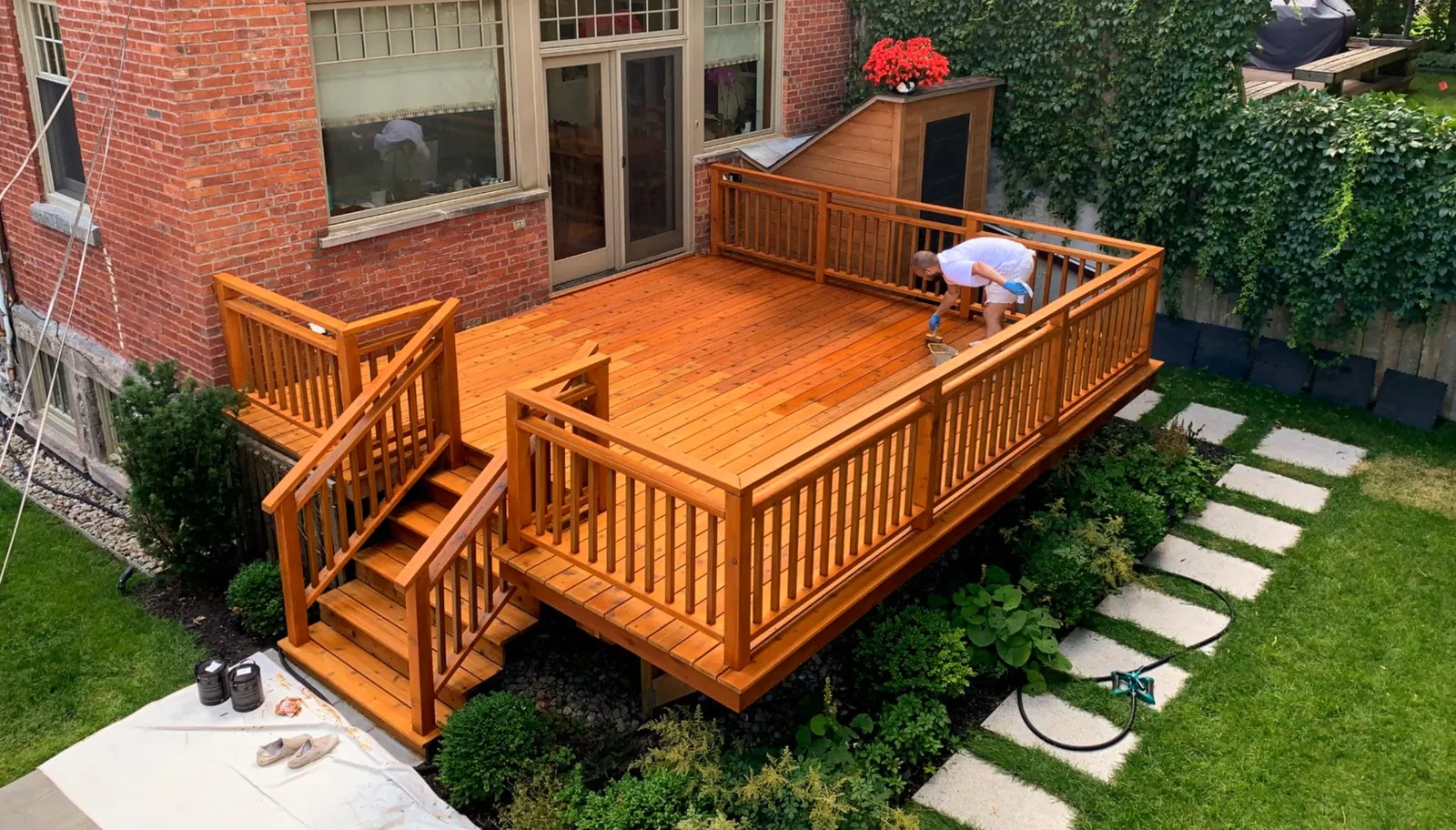
A deck that invites you to spend a little more time outside. We bring care to the sanding, preparation and finishing of decks, fences and the wood details.
A free estimate at your home, followed by a detailed written quote.
Why OstéoPeinture
The finish starts
with the preparation.
A good-looking stain starts well before the first coat. We assess the wood and its previous finish, check moisture levels, and take the time to wash, sand and repair it properly. Then we help you choose a stain suited to the surface and the look you want. Once you’ve chosen a stain, we apply it and get your backyard ready for you to enjoy.
Selected projects
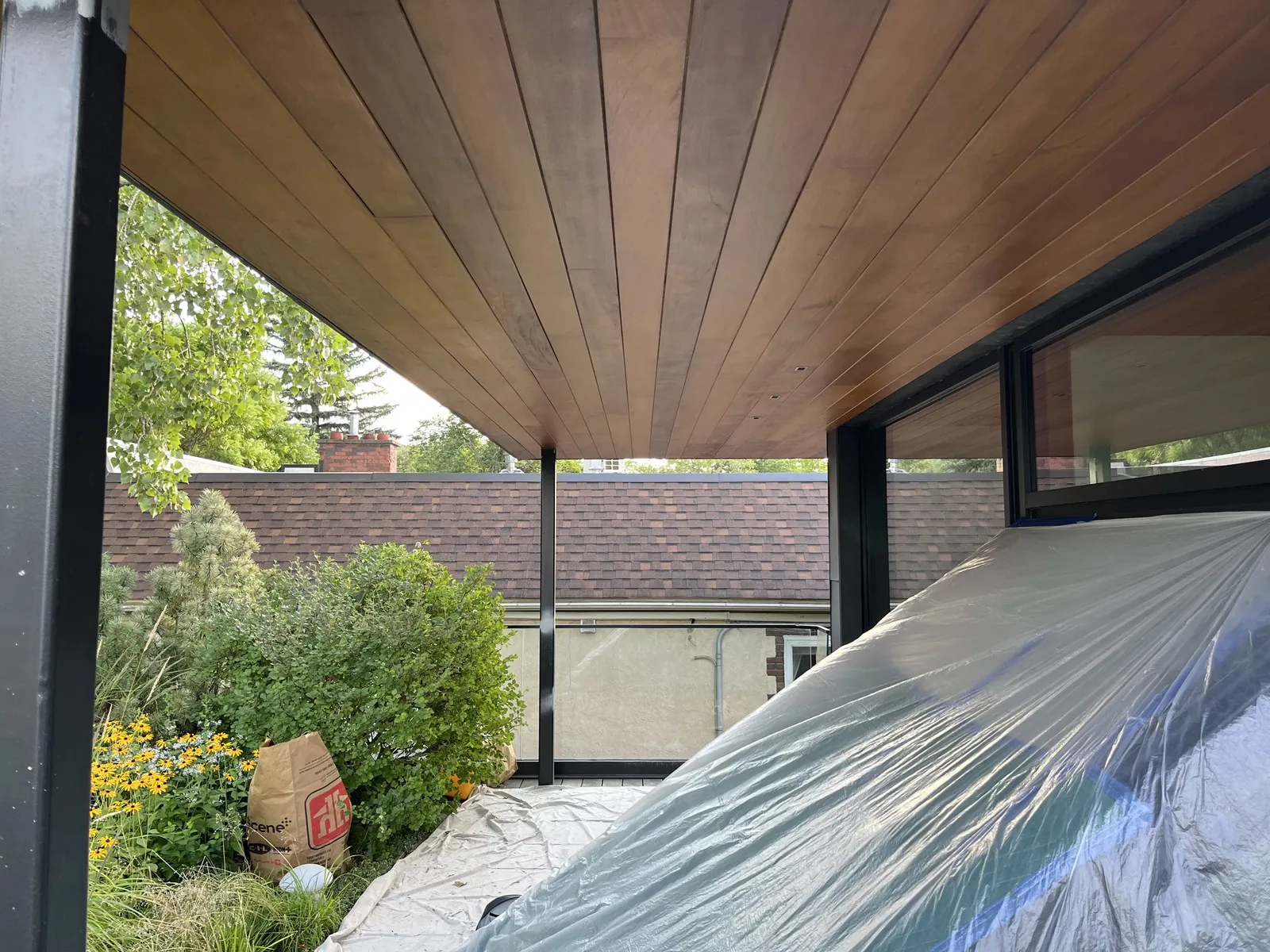
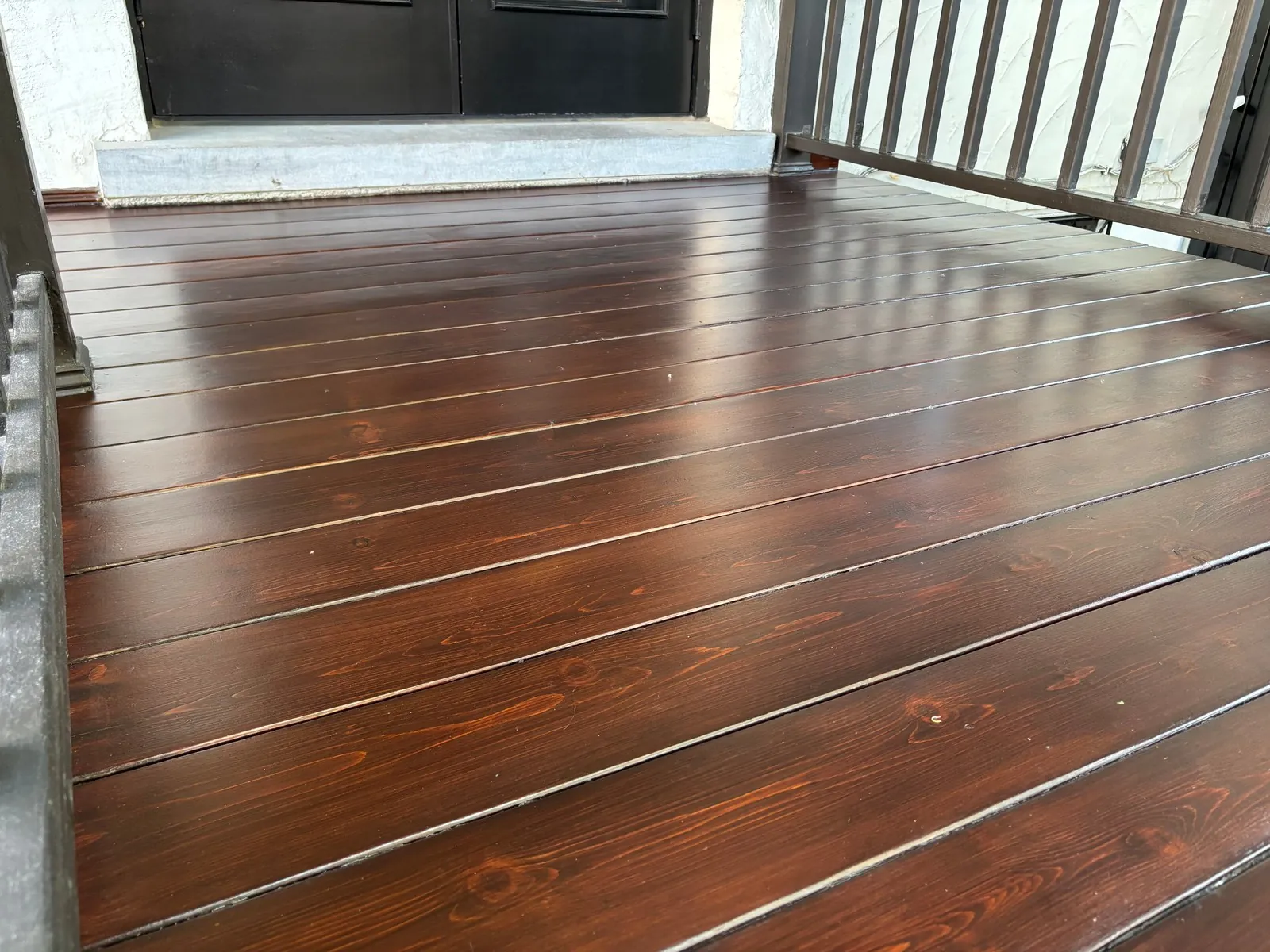
Some of our woodwork.
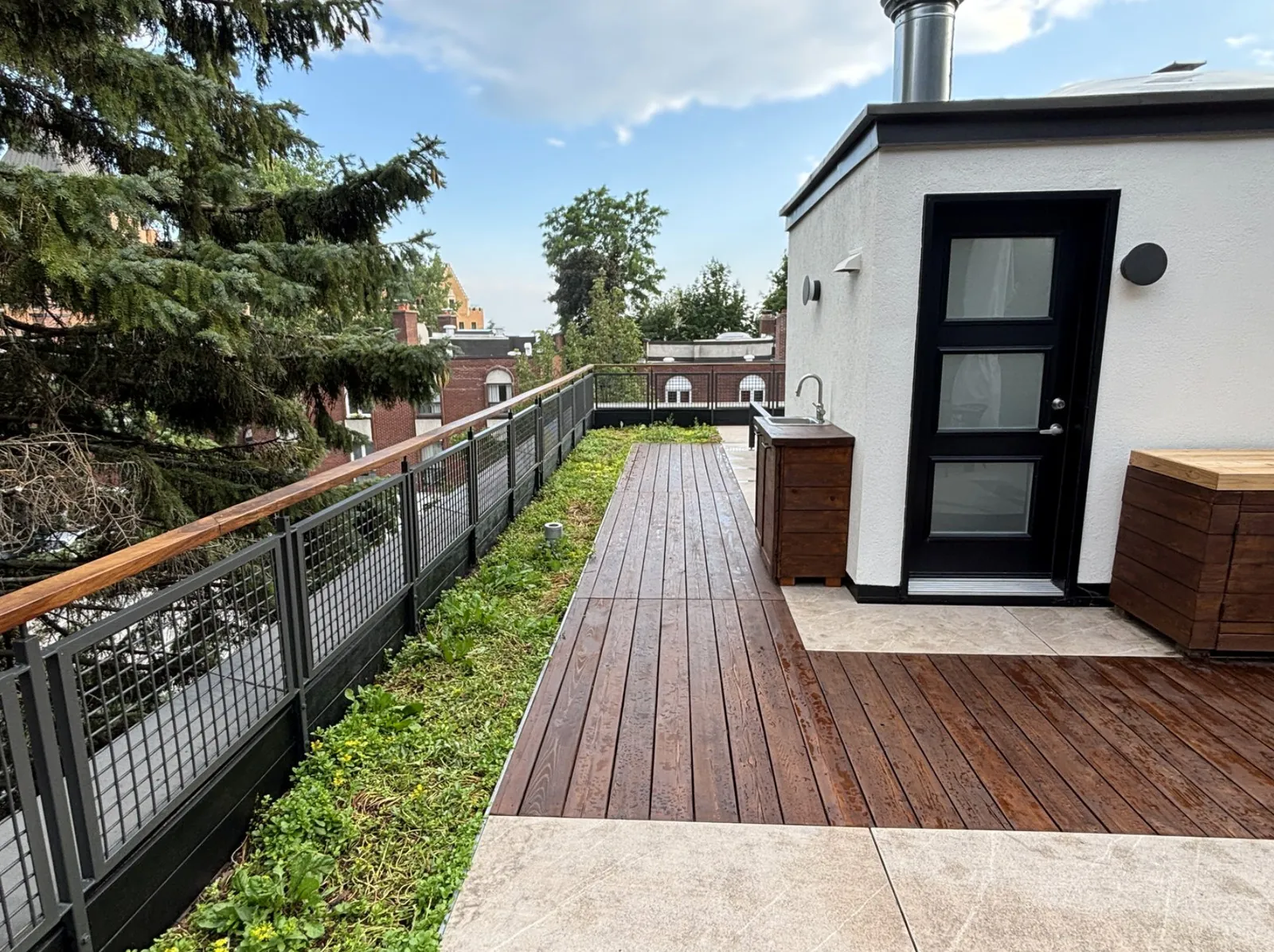
Trafalgar Place
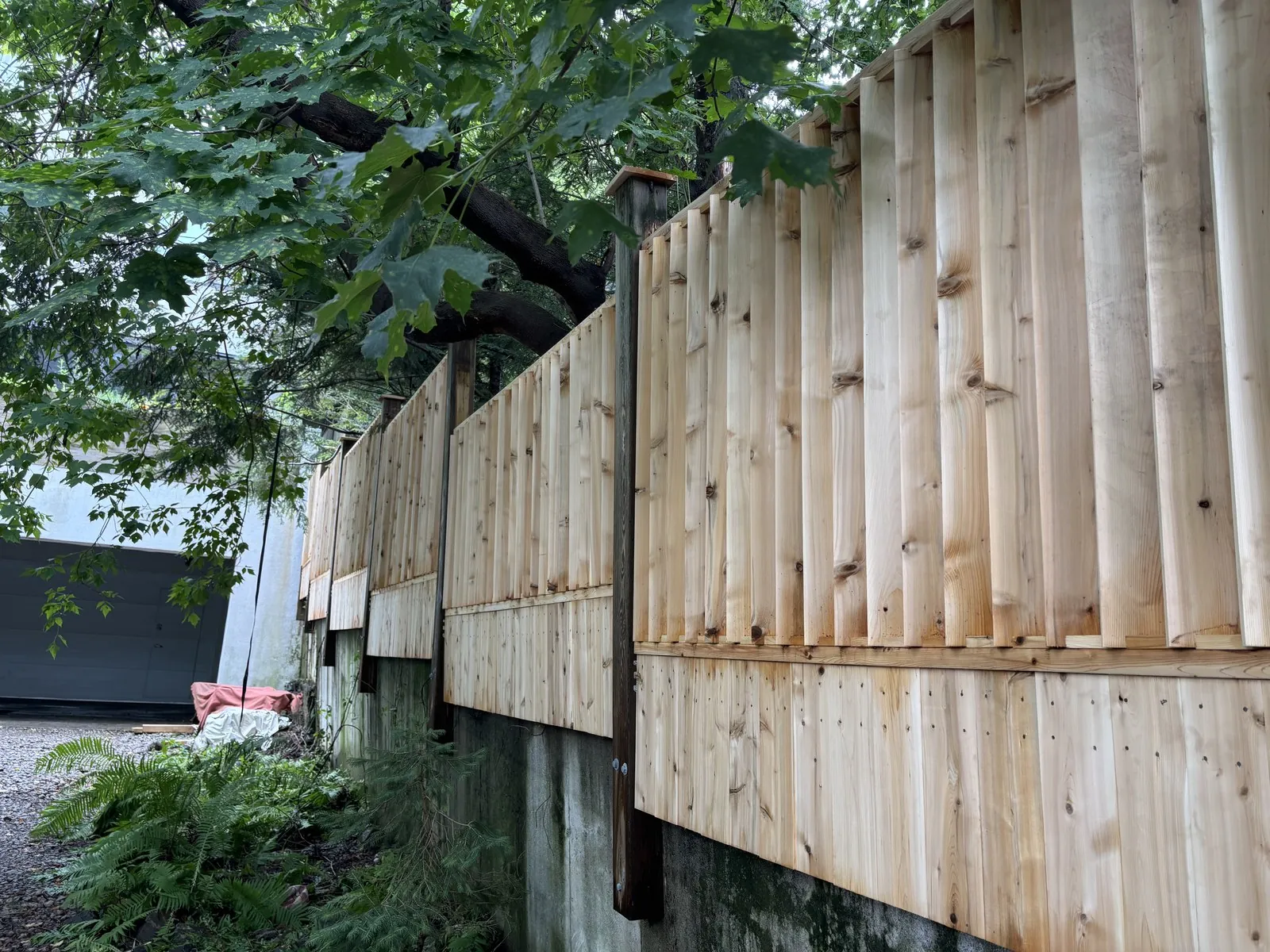
Mont-Royal
In photographs
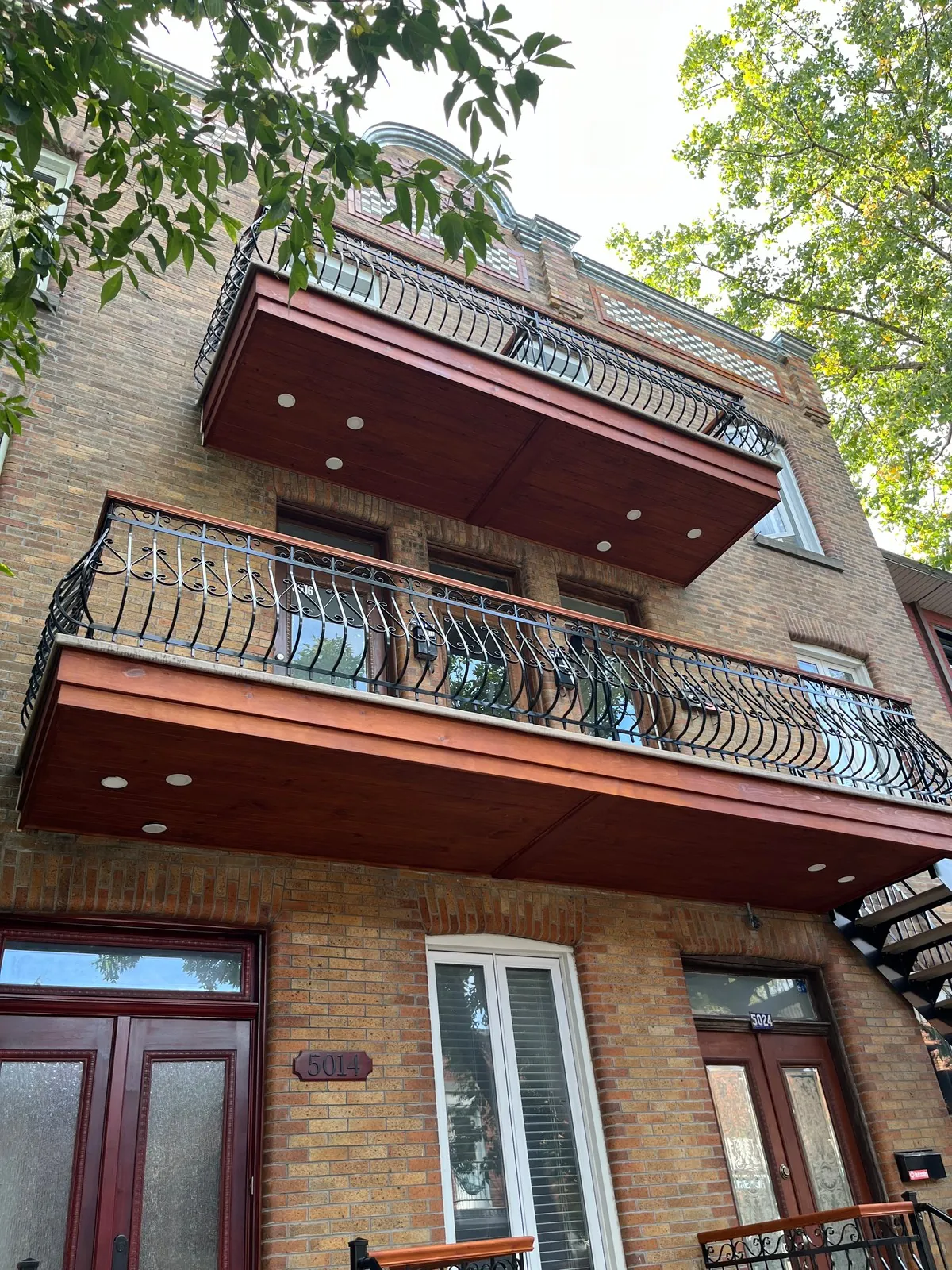
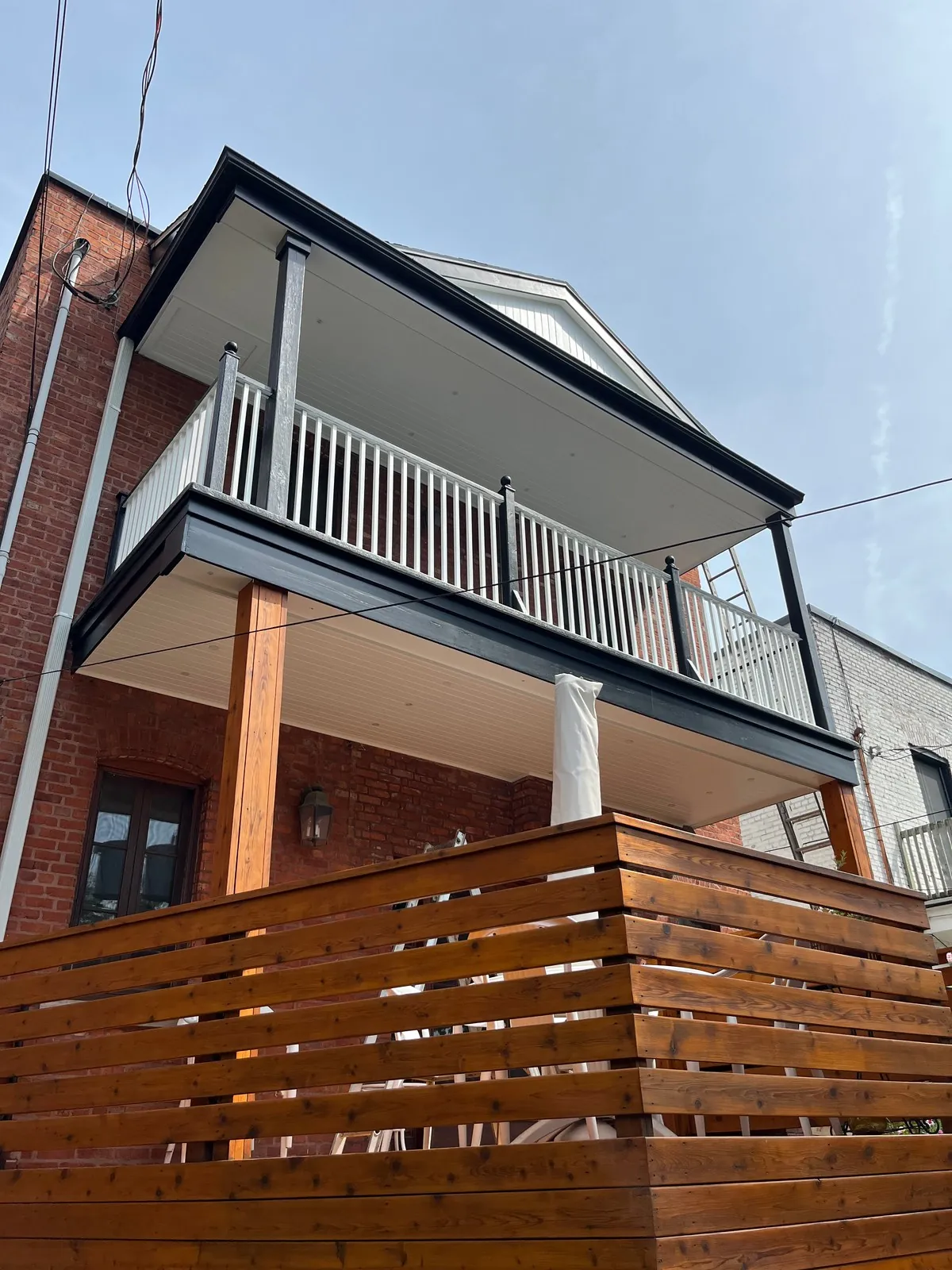
More of our woodwork.
Your questions, answered
A little more to know about wood staining.
Estimates, preparation, products and what to expect. Open a topic to find the details.
About our deck and fence staining service
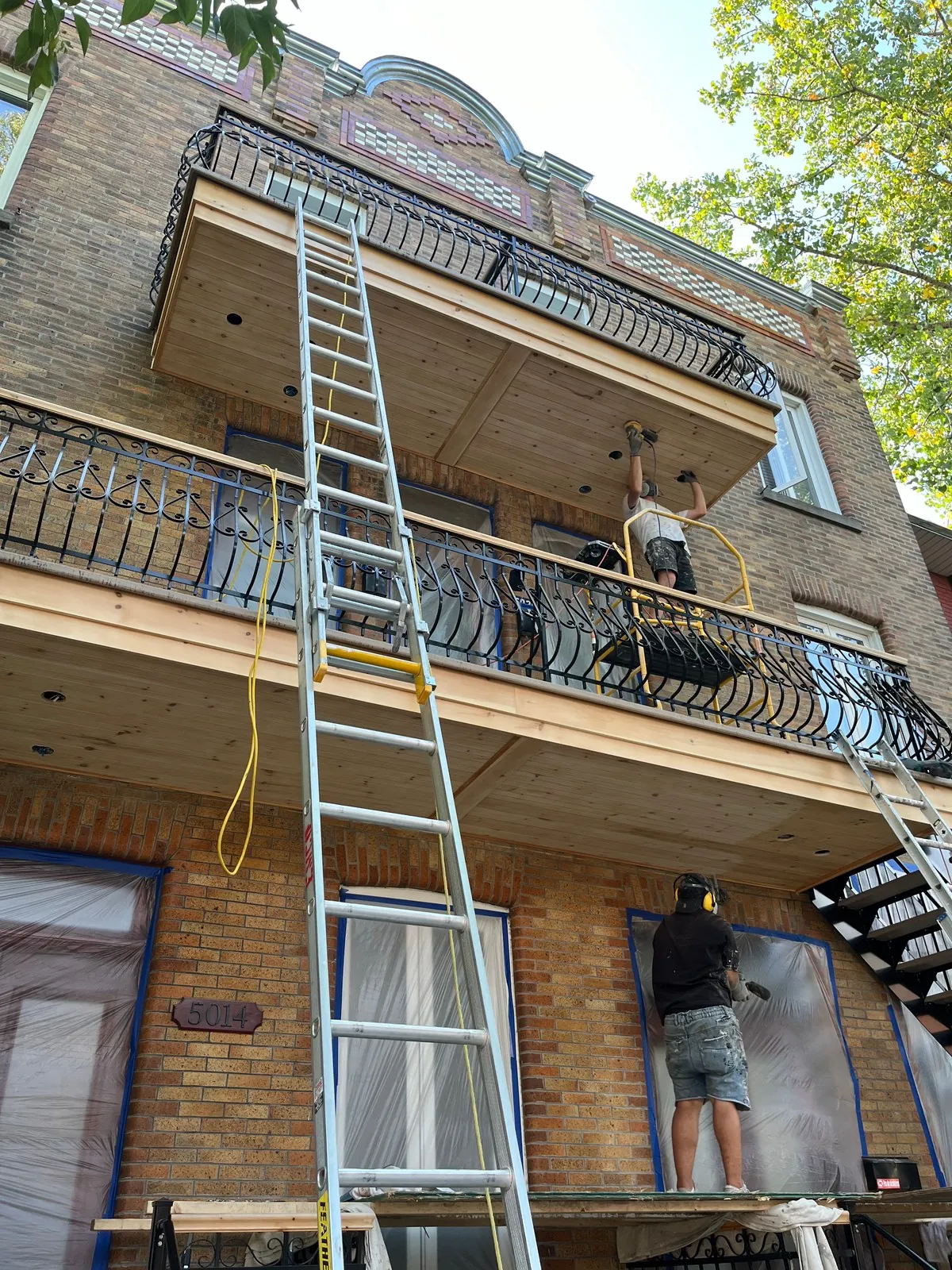
Staining wood is some of our favourite work, and the most satisfying we get to do. It takes a lot of sanding, care and attention, but the result is always worth it. It also depends on everything being right: proper preparation, the right temperatures, and premium products matched to the type of wood. We sand the wood back to a clean, sound surface, take off the grey weathered fibres and any failing finish, and make sure that the humidity levels are right before anything goes on. Then the stain can do what it’s meant to do, protect the wood and bring out its grain.
What we stain
- Decks and patios, including railings and stairs
- Fences
- Front stairs and entrances
- Wood siding that is bare or already stained
- Doors
- Pergolas
- Outdoor furniture, when it's bare wood ready to stain
What's included in every staining quote
- Pressure washing, about two weeks before the job.
- Sanding of every surface to be stained.
- Two coats of stain, with the stain included.
- A full cleanup at the end.
Billed separately:
- Replacing screws whose protective coating gets sanded off.
- Repairs, such as replacing rotten boards.
Should you stain or paint a deck?
We recommend stain whenever possible, even if you want a solid colour. Stain soaks into the wood. It lets the wood breathe, expand and contract, so moisture can always get out.
Paint sits on top of the wood like a skin. The wood's natural oils keep trying to push out through it, so sooner or later the paint cracks. When it does, water gets in and stays trapped, and the wood starts to rot from the inside. This matters even more for low decks and shady fences, where moisture builds up.
We only recommend paint when the wood is too far gone for stain, or when the deck will be replaced within about five years. In that case, we prime with an oil-based primer and use a floor and deck paint. The deck must also be at least 3 feet off the ground, so moisture doesn't get trapped underneath.
Which deck stain should you choose?
| Stain type | Best for | What to know |
|---|---|---|
| Transparent or semi-transparent | Beautiful wood, a first stain, or wood already stained this way | Shows the wood grain. Colour choice is limited. |
| Opaque (solid) | A desired specific colour, or wood already stained or painted with a solid colour | Wide colour choice. Hides the natural grain of the wood. |
The products we use:
- Sansin (water-based): our main stain for decks, fences and railings, available in transparent, semi-transparent and opaque. It lasts a long time, looks beautiful and lets the wood breathe. It tolerates wood with a slightly higher moisture level, which helps on low decks and shady spots. We use Sansin DEC on decks and Sansin SDF on fences and siding.
- SICO ProLuxe, formerly Sikkens (Alkyd-oil-based): for a richer, glossier look that puts the wood front and centre. It's best on premium, dense woods getting their first stain, or wood already stained with it. Applied properly, it lasts a very long time.
- SICO ProLuxe Rubbol Solid Stain (water-based, opaque): a hybrid alkyd and acrylic formula. It soaks into the wood like an oil but stays flexible. We also use it on the wood beams of Tudor façades. It looks like paint but protects the wood like a stain.
Going from paint to stain: we don't usually recommend it. In rare cases, when the wood underneath still has potential or our client insists, we can stain over water-based paint after heavy sanding, usually with an opaque stain. It doesn't work over old oil paint.
How deck sanding and staining works, step by step
- Estimate and quote. We look at the wood with you and recommend a stain.
- Pressure washing. About two weeks before the job, we wash off dirt, mould and loose old stain.
- Drying. We wait until the wood is back to 12 to 15% moisture, checked with a moisture meter. Sansin can go up to about 17%. At 20%, the wood is too wet.
- Scraping and sanding. For a transparent or semi-transparent stain, we sand down to bare wood. For an opaque stain, we sand until the surface is even. We finish with 80-grit sandpaper: smooth to the touch, but open enough for the stain to soak into the grain of the wood.
- Screws and repairs. Sanding removes the coating on screw heads that are protruding from the boards, so we replace those screws to prevent rust. We also replace rotten boards.
- Cleaning. We vacuum and remove all sanding dust.
- First coat. Never in direct sun, and only with no rain expected for 24 hours.
- Second coat. After the drying time recommended by the manufacturer, with the same conditions.
Painted decks need more work. We remove the old paint with a belt sander, then go over the wood with 80 grit before staining.
Can you stain a new deck right away?
It depends on the wood:
- Pressure-treated wood: wait at least 6 months before staining, so the wood can dry out after treatment.
- Kiln-dried wood, such as cedar or pine: ready right away. It already has a low moisture content when you buy it.
- Air-dried or "green" wood: needs about 2 to 6 weeks to dry. Its sap and moisture keep the stain from soaking in.
- Wood that got rained on: needs 2 to 3 dry, sunny days.
We always check the wood with a moisture meter before staining. We aim for 12 to 15% moisture, and up to about 17% with Sansin.
When can you use your deck again?
You can usually walk on the deck after 24 hours. We suggest waiting about a week before putting furniture back. Drying times vary by product, and we always follow the manufacturer's instructions.
Weather and deck staining
- Temperature: most stains need at least 10°C during application and for 24 hours after.
- Rain: each coat needs 24 hours without rain.
- Rain after sanding: bare wood can look uneven after rain, so we may sand it again before staining.
How long does deck staining take?
It depends mostly on the condition of the wood, and on whether it has been stained or painted before, and with what. Weather and drying time also play a role.
How much does deck staining cost in Montreal?
Every deck is different, so we price each project after the free estimate. The main factors:
- Size of the deck or fence.
- Condition of the wood: old, weathered wood has more dead wood to sand off.
- Old stain or paint to remove.
- Railings and spindles: tight spots that a sander can't reach take longer.
- Access: a fence hidden in plants or a tight backyard takes more time.
- Repairs and screws, billed separately.
How long does deck stain last?
- Vertical surfaces, like fences and spindles: at least 3 years, and often much longer.
- Horizontal surfaces, like the deck floor and the top of railings: about 2 to 3 years.
Foot traffic makes the biggest difference. Shoes, daily use, snow shovelling and ice all wear stain down faster than light, occasional use.
How often should you stain a deck?
After a full sanding and staining, the best way to make it last is to wash the deck and add a fresh coat every year or two. No sanding is needed, so it's quick and inexpensive. You can even do it yourself.
The deck floor needs this most. Fences and other vertical surfaces can wait much longer. It's time to re-stain when the stain looks faded or scuffed.
Common deck staining mistakes
- Skipping proper prep and cleaning
- Not sanding down to bare wood
- Staining wet wood without checking it with a moisture meter
- Staining in bad weather or direct sun
- Poor application, which makes stain peel instead of slowly fading
Where we work
Our house painters work across Montreal, mainly in Westmount, Outremont, Mount Royal (Ville Mont-Royal), the Plateau Mont-Royal, the Mile End, Notre-Dame-de-Grâce (NDG), Côte-des-Neiges and Saint-Henri. Most of our clients are in Westmount, so we know the care its older homes need.